
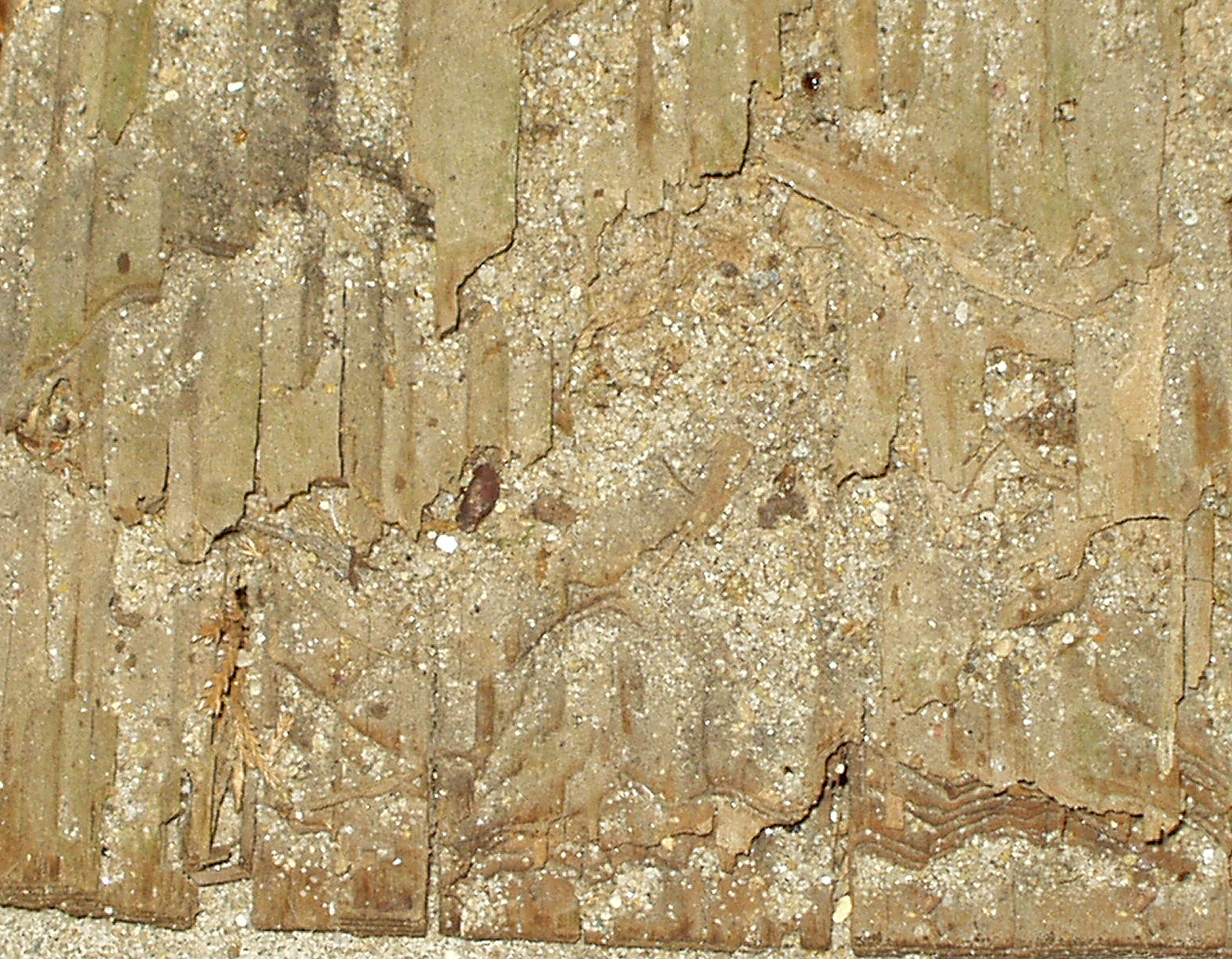

Damage is not always visible on the surface
Timber can retain an outer surface while material inside has been removed. A small visible mark may not show how far damage extends. The reference photograph shows an example of damaged timber; it does not establish the condition of your property or identify the termite species involved.
Where damage may be noticed
Skirting, door surrounds and other accessible timber may reveal changes, while structural timber can be concealed. Do not assume the visible part is the whole problem. An inspection report should make clear which areas were accessible and what further investigation is recommended.
Old damage and active termites are different findings
Damage can remain after past activity. Conversely, termites can be present before an obvious defect is noticed. Visible damage alone does not tell you whether activity is current. Treatment records and an inspection help establish what needs doing next.
Treatment and repair are separate decisions
Pest treatment does not restore the strength of timber. A suitably qualified building professional may be needed to assess repairs or structural safety. Keep people away from an area that appears unsafe, and do not remove or cover suspected workings simply to improve its appearance before an assessment.
Documenting your property
Keep inspection reports, dated photographs and treatment records together. Note the exact location of each concern. With customer permission, genuine project photographs and findings can help explain the assessment and follow-up; our case-study section is reserved for clearly labelled educational guides and documented work.
Further reading
A CLEARER NEXT STEP
Tell us what you have noticed.
Share your suburb, property details and any existing treatment records. We will discuss the appropriate inspection or service.
Request an inspection or quote ↗Call 0400 167 631